
New kitten
Your first 30 days with a new kitten: a week-by-week checklist
9 October 2026 · 2 min read
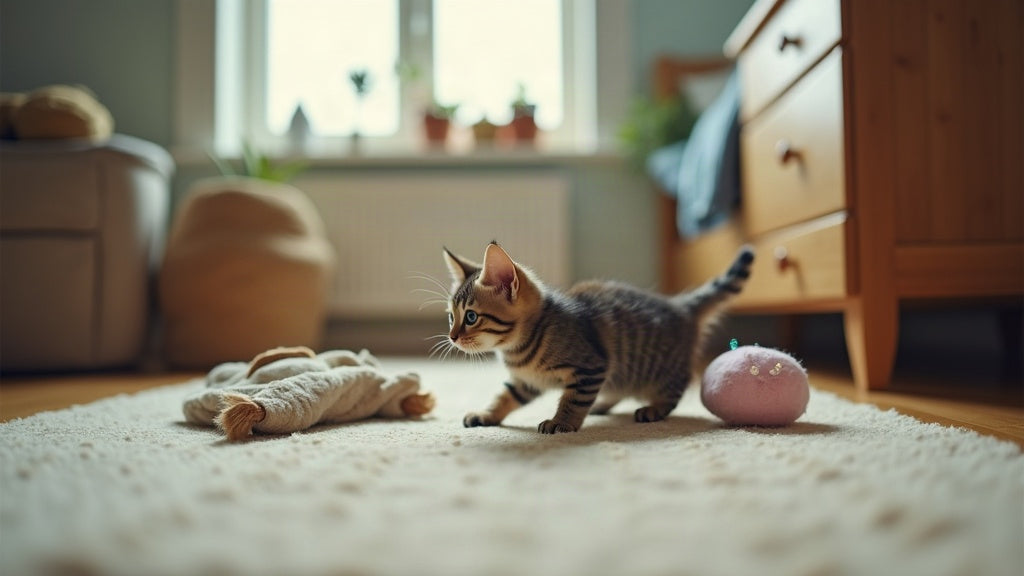
The first month sets the pattern for how your kitten feels about the house, the carrier and you. The aim is to keep things small and predictable. Here is a simple order of events.
Days 1 to 3: one room
Give your kitten a single safe room with a litter tray, water, food, a bed and a hiding place. Place the litter tray away from the food. Let them come out when they are ready. Keep visitors to a minimum.
Week 1: routine and vet
- Feed at the same times each day, using the food the breeder or rescue was using, then change gradually over a week.
- Book a vet check. Ask about vaccinations, worming and flea treatment.
- Cats in England must be microchipped by 20 weeks, so ask about this at the same visit.
Week 2: widen the world
Open the door to one more room at a time. Add a scratching post close to where they sleep. Start short play sessions of five minutes with a wand toy, never with your hands or feet, so they learn what is allowed to be bitten.
Week 3: handling and carrier
Handle paws, ears and mouth for a few seconds at a time and reward with a treat. Leave the carrier open in the room with a blanket inside and feed a few treats in it. A calm carrier habit now saves a lot of stress later.
Week 4: settle and plan
Discuss neutering with your vet. Many UK vets and charities recommend it from around four months old. Introduce other household pets slowly and with a barrier at first.
Red flags to call the vet about
Not eating for more than 24 hours, diarrhoea that lasts, trouble breathing, or a kitten that seems very flat or hides all the time.
The Kitten Starter Nook Box has soft toys, a felt tunnel and a wand for the first month.